Donations

Showing posts with label Review. Show all posts

12 November, 2014

My Top Twenty, Part Two


This is the second part of a list of my favorite books. I have written a small review next to each book, as previously, and I intend to write a full review at a later date or as requested, so please leave a comment. They are in no particular order as I love them all for very different reasons. For part one please click here.


Junior

Culkin, Macaulay (2006)

Good-read rating; 3.15

Definitely a good read for when your Home-alone (couldn't resist), as it will have you laughing unpredictably and loudly, and you won't be entirely sure why.I have only just started keeping a readers journal as of 2013 and my initial response was "Very quirky writing style and content. A MUST re-read. Enjoyed immensely. 9/10". Now a lot of that comes from the fact I was having a reading binge in celebration of finishing University ("I can finally read what ever I want to!" sort of thing) but it is an enjoyable, surreal read.
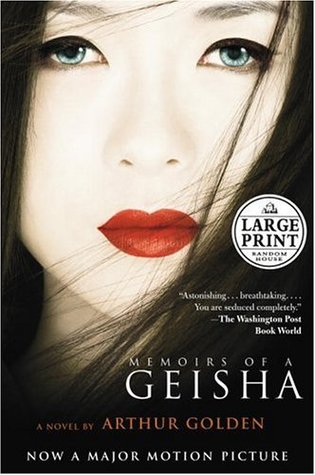


Memoirs of a Geisha

Golden, Arthur (1997)

Good-read rating; 4.03

I read this novel after watching the film (2005) but I love them both. I don't really like watching the film before reading the book but sometimes that happens. I found that the book helped me flesh out a lot of the film and it seemed a shame that the film left a lot of the original story absent. Golden creates an overview to life as a Geisha during 1929 Japan.
Golden was sued in 2013 by Mineko Iwasaki as her life story was used as a source of inspiration for this novel. As Golden acknowledged her in the publication, Iwasaki faced a lot of negativity and even death threats because of this, due to what was seen as her breaking the Geisha code of silence. She when on to write Geisha, a Life (2003).


Bastard Out of Carolina

Allison, Dorothy (1992)

Good-read rating; 4.05


Initial response; "Enjoyed very much despite the darker themes. Found it [the child abuse] to be dealt with very sensitively. Very believable characters, I reacted to this a lot emontionally, especially liked the 'Earl' Character. Watched the film version soon after and enjoyed it too [I loved the fact that Michael Rooker, aka Merle from 'The Walking Dead' played Earl] but was saddened that they didn't include the character Shannon Pearl [I was also excited about it having Christina Ricci, who I love in Buffalo 66 (1998) and Sleepy Hollow (1999), as 'Dee Dee'. Yet her character was reduced to a few minutes of dialogue] 8/10."


A Spot of Bother

Haddon, Mark (2006)

Good-read rating; 3.45

This novel is an exceptional piece that deals with humanity. Fear, hopes, love, betrayal. Its is a feel-good read that really makes you work for it. The protagonist, George, is a hypochondriac which leads to some minor gore in the plot through out, but he is oddly loveable dispite his short falls, as are all of the main characters. It is very entertaining, Michael Dirda of The Washington Post adding "...half the time while reading A Spot of Bother you won't be sure whether to laugh or cry. Which is, I suppose, precisely the point."


Wuthering Heights

Brontë, Emily (1847)

Good-read rating; 3.79

I first read this when I was around ten after seeing it in ballet form on a school trip. I didn't understand a thing I was reading and promptly gave up, as I wasn't a strong reader back then. However for my A levels we studied Wuthering Heights and I found it so captivation that I have reread it many times as well as viewed many of the films and series that either fall flat or outright butcher it. It is a classic that isn't praticually demanding due to its shortness and as it is in popular culture, somewhat due to Kate Bush's 1978 Song  of the same name (check out the video, utterly terrifying). Mainly I would recommend reading this so that you can form an opinion on the notorious faux-romantic Heathcliffe. I think he's a bastard.
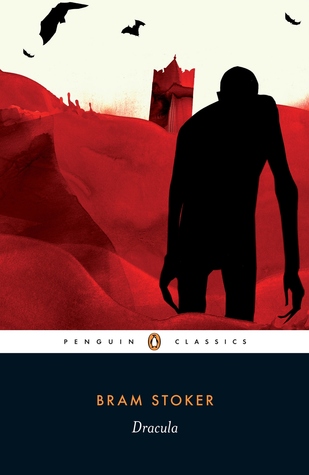


Dracula

Stoker, Bram (1897)

Good-read rating; 3.94


Another A Level read, we were studying the Gothic Genre, and again another classic, this is slightly more challenging than the last but the language is surprisingly modern and the use of  Victorian innuendos and allegories are rather amusing as well as off putting. Any vampire fan must read this and dispel their sparkly views of the vampire (yes Twilight, I blame you). I will be posting an article on Vampires soon, so be sure to check back for that. The link for that will be here. THe plot follows a group of high class men and women during the Victorian era. After Harker, one of the narrators granted by the novels epistolary format, meets and becomes imprisoned by Count Dracula he is barely able to  escapes. Dracula comes to England soon after and begins to prey on the groups women.


The Sound of My Voice

Butlin, Ron (1987)

Good-read rating; 4.16


Written entirely in second person, but very well written. You love to write in second person and you love to read second person novels. I personally love to write in second person as long as it is done well, so apologies for the latter, and due to its shortness I think that it is a good first stop for anyone who has never tired second person texts. The plot is centered around the protagonist, Morris Magellan, and his alcoholism. The novella offers an insight into the mind of an alcoholic and attempts to describe how one would view the world. I can not say if this is an accurate portrayal however it is hauntingly saddening yet its use of humor is well timed and I personally found some lines hysterical and other lines poetically beautiful. I intend to write a full view for this and the link for that will be here.
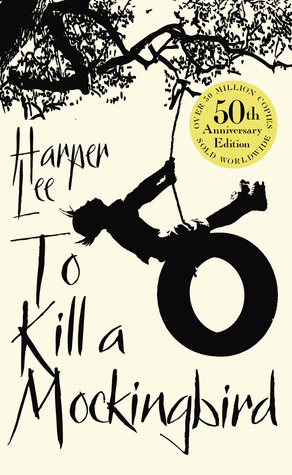


To Kill a Mockingbird

Lee, Harper (1960)

Good-read rating; 4.23


Classic southern Americana. This novel is very much about right and wrong, racial and gender equality, the perils of prejudgement and growing up in a world when all cultural morals are being reset. There are section which are focused so intently on the environment that when paired with Lee's Southerly use of language that you begin to believe you are in Alabama, This novel is amazing. Go read it. I personally enjoyed the story of Boo Radley.


Morvern Callar

Warner, Alan (1995)

Good-read rating; 3.68


I enjoyed the protagonist in this, Morvern, she is utterly unexplained, she behaves intrinsically and without any usual logic. I was recommended this novel in college and read it in two sittings, I had never read anything with a main character quite like her before and I am still not sure why I still liked her. It is written in a colloquial style, perhaps with a touch of  Scottish slang and Warner uses her language to show her limited education.The tone of the novel is very gritty and tense, almost like a thriller, yet is slow paced. In the novel Morvern is constantly providing a playlist of music that a number of readers have paired with reading the book to add to its impact (Slowthrills.com have created a playlist on Spotify of some of the mention tracks). The narrative begins with Morvern discovering her dead boyfriend after he committed suicide. Quiz time;Do you?
a) Collapse to the floor in shock and cry for your lost love?
b) Hyperventilate and ring the police?
c) Take all of your boyfriends money, publish his book, and depose of the body yourself?
Answers
 A; You are normal. B; You are normal and logical. C; You are Morvern Callar. Fancy a Silk-cut?


Snow


Maxence, Fermine (1999)

Good-read rating; 3.76


Translated from Japanese by Chris Mulhern, this short text is written in haiku form. Although the plot is a little sexist to both genders (the female characters only existing as a form of muse for the males, and the males being incompleate without a female). However it is an ascetic piece that is full of lovely imagery and is also a kind of transformation piece inspired by snow white. There were some part that seemed odd and mispleced tat illuded to the protagnists sexuality as the form make them seem abrupt and ugly when comparted to the beauty that followed, but that added some realism to the fantasy themes. You are able to easily read this in one sitting.


Thank you for reading. Please show your support by clicking like, commenting and following.

Please check out my e-books on amazon kindle.
All works Copyright Kate Ruston 2014

Like us on Facebook

My e-Books

The Blind Kings Sons (£0.99)

Harry Potter and the Gothic Genre (£0.99)

My art @ Deviant Art

01 October, 2014

My Top Twenty, Part One


This is the first part of a list of my favorite books, curtsy of my Good-reads profile. I have written a small review next to each, although I will review some of them fully at some point or as requested. They are in no particular order as I love them all for very different reasons. Part two is available here.
 As always, please like, comment, and enjoy!


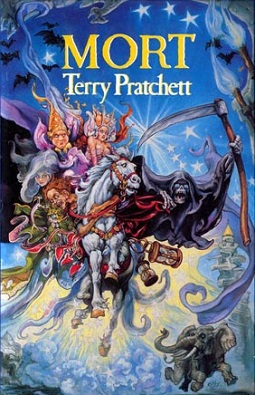
Mort (Discworld, #4)

 Terry Pratchett (1987)


Good-read rating; 4.15


I read a lot of the Discworld books in the last few years of high school after playing the Discworld game as a child. The characters are so lovable in this novel (not that they aren't in the other Discworld books) and as the character of Death is hilarious to me so his large presence in 'Mort' only makes me love it more. I recall laughing a fair bit when reading this, plus you get the satisfaction found in all of Pratchettt's work, the moment when you actually understand science and maths jokes. I'm sad to say that as I've gotten older, I get less and less of them.


The Secret Garden

 Frances Hodgson Burnett (1910)

Good-read rating; 4.09


One of the first books I read as a child. It is a very enchanting read for any age group or lover of the fairy-tale feel in novels. Although there is no real supernatural presence, it still has the same tone as the classic fairytale (like Hans Christian Anderson) because of its target audience being children. It also gets bonus points from being set in my home province, Yorkshire, England.


The Color Purple

 Alice Walker (1982)

Good-read rating; 4.13

The first book I read that wasn't written in standard English and its also in epistolary format which I love from the tone of realism it creates, which also makes Celie, the protagonist and narrator, appear more believable. I love how the language processes with the personal development of Celie. This novel deals with a lot of adult themes including racism, sexism, sexual abuse, sexuality, faith and gender roles. 


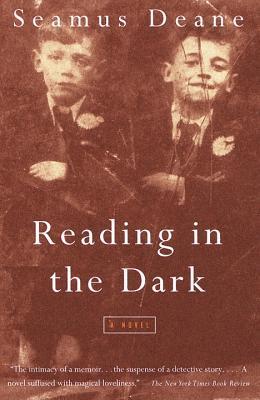
Reading in the Dark

Seamus Dean (1971)

Good-read rating; 3.72

I read this novel in my third year at university and I was transfixed, reading it in two sittings (confession, this was the only novel I read in detail, i.e. not skipping parts, from my reading list for the whole year). I was actually kind of saddened by how little we studied it but I wrote my essay for that module on this novel and "Observe the Sons of Ulster Marching Towards the Somme", a play by Frank McGuinness (1985). I was captivated by the entire family in the text, which were loosely based on Deans own family, 


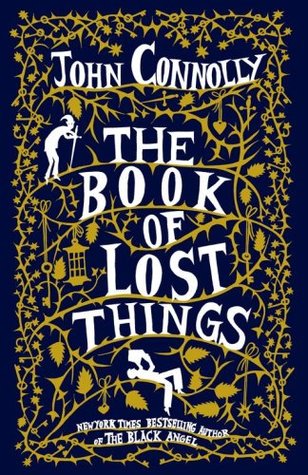
The Book of Lost Things

 John Connolly (2006)

Good-read rating; 3.97

This may be my all time favourite read as it appeals to both my inner-child but also satisfies me as an adult reader by not brushing over the harsh sides of the original fairy tales that Disney have made 'child-friendly'. The characters are very vivid and the whole text has a dream like quality that I really love.

For My full review please click here.


The Night Circus

Erin Morgenstern (2011)

Good-read rating; 4.00


I am actually due to re-read this so I will most likely be writing a full review. Set in Victorian London, Celia Bowen and Marco Alisdair are puppets in a magical feud/bet between their fathers in which the Circus is the venue.The structure of this novel is lovely, a short paragraph before each chapter more or less that is written in second person, where as the main text is in third. this technique really enables you to imagine the circus as if you are walking through it and imagine all of the strange and wonderful creations found within, including the magic and strangeness of an entirely black and white circus grounds. The descriptions are very thorough and charming, however they can sometimes be confusing due to a drastic change in pace. Again the characterization makes a relatable read, which is often not the case in a novel with so many fantasy elements. Just as a side note, the book is beautiful to look at too, I have the hard back addition. By the end you too will be a rêveur ( the name of the Night Circus's fans meaning Dreamer).


The Book of Words

Jenny Erpenbeck (2007)

Good-read rating; 3.81


I stumbled upon this book by accident in The Works, a shop that sells cheap books. It is a translation from German and is translated by Susan Bernofsky, which may account for the some of he strangeness of this novella. It is written in stream-of-consciousness and has a uneasiness that flows through out the text. It is a coming of age plot set in an unnamed South-African country, in with the unnamed protagonist witnesses the brutalities of war and tyranny along with unsettling truths about her family.


The Fall of the House of Usher and Other Writings

Edgar Allan Poe (1839)

Good-read rating; 4.12

This is my go-to for all things Poe as I have owned it for years (its contents being poetry, short stories, essay, reviews and a good introduction to the life of Poe). However, saying that I have many other collections, some just for short stories, others filled just with the poems... I really should just get the complete works. My favourite poems 'The Raven', 'The Valley of Unrest' and 'Romance' (however 'Bridal Ballad' is unfortunately absent). Short-stories included are; 'The Tell-Tale Heart', 'The Oval Portrait' and 'The Pit and the Pendulum' to name a few. I think is addition (see pictured above) is a great first glimpse into the darkness and lunacy found in Poe's writing.

The Little Prince

Antoine de Saint-Exupéry (1943)

Good-read rating; 4.23

I read this only a few years ago and enjoyed it immensely despite it being aimed at children (you may have noticed my love of fairy-tales etc. by now...). It is translated from the original 'le Petit Prince' as the Author was French. The experiences in the text are related to Antoine de Saints-Exupéry's experiences during his involvement in WWII. It has a myriad of spiritual and humanitarian ideas within, as well as beautiful child-like places and characters that are insightful metaphors that can be appreciated by the adult reader. Fully suitable for reading to your children.

Most Famous Quotation - "One sees clearly only with the heart"


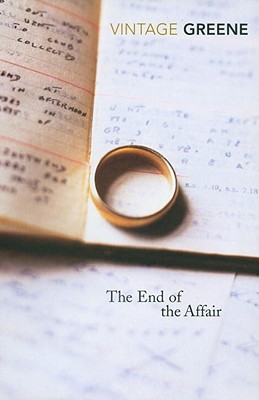
The End of the Affair

Graham Greene (1951)


Good-read rating; 3.96

I am aware that Greene gets a lot of criticism from his slow pace and often idol characters, however in this text it is used to emphasis Bendrix's (the protagonist) obsessions, both as a writer and a human. Only Greene could have written this character. Set during WWII London, Bendrix struggles with faith, loyalty, infidelity, trust and love which was most likely based upon Greene's affair with Lady Catherine Walston  (whom it is assumed is the 'C' or 'Catherine', in the American additions, whom the novel is dedicated to). It was the last novel written by Greene that was explicitly Catholic and there has been film and operatic adaptation as well as a audio addition read by Colin Firth (Audible.com), who I think is a fantastic voice for this first person text.


I hope you enjoyed reading Part One of my Top Twenty, Part Two will be posted shortly!


Thank you for reading. Please show your support by clicking like, commenting and following.

Please check out my e-books on amazon kindle.
All works Copyright Kate Ruston 2014
Like us on Facebook

My e-Books

The Blind Kings Sons (£0.99)

Harry Potter and the Gothic Genre (£0.99)

My art @ Deviant Art

17 September, 2014

A Review, The Book Of Lost Things


Illustrated by Rob Ryan.
My Cover


"Everything You Can Imagine is Real."   —Pablo Picasso


'The Book of Lost Things' (2006) by John Connolly is by far my favourite read, it appeals to both my inner-child but also satisfies me as an adult reader by not brushing over the harsh sides of the original fairy tales that Disney have made 'child-friendly'. I see this book as a testament to the benefits of reading fairy-tales as an adult reader but also as a indication towards Connolly's belief that it is a shame that it is now unexceptionable to expose children to this side of the fairy tale. I personally believe that the original stories are much more beneficial to the reader, regardless of age, as they create a safe environment to teach important, albeit uncomfortable or frightening, morals and lessons about reality (for all of you who are interested in the Fairy Tale Origins try this article or wait for my post on the subject). In my opinion, children should not always get a happy ending at the end of each story, as you are impinging that life is the same. Perhaps however this, for the sake of an easier life, does not apply to stories told directly before bedtime. This being said, I don't think that this novel is in any way aimed or should be read to a child as it goes into the metaphors that even the Victorians tried to brush over.

This novel has the dark tone, as well as Gothic and Macabre aspects, found in Connolly's other novels, however seems to be in another world to them, being that it is not similar to anything else he has written. It seems also to have a lot of aspects of the bitter-sweet Victorian fairy tales which were also dark in content as I have mentioned. It is particularly a study of the psyche of the protagonist, David, and how he deals with the death of his mother and his childhood, in a way it is a bildungsroman that is either situated internally in David's imagination or in the fairy tale world. It also addresses how some children who have been protected for harshness may become more unstable (David has obsessive compulsive disorder and is hearing voices of books in his psychiatrist's office, which is actually an amusing section) if they are not able to confront adult concerns in childhood in a way that they need to, being that David's father disapproves of his fixations with fiction, encouraging him however to engage with newsprint, which I assume David finds too real.


 For those of you who have not read it I have included a brief plot summery below.

Plot Summery (warning, you may see this as spoilers)

It begins with a boy, named David, who is losing his Mother during the 2nd World War. After her death he moves to the county side near London with his Father and his new wife Rose, his Mothers carer. It is a short time before this that David starts having black outs, odd dreams and can hear books talking amongst themselves. His dreams are also affected and in these dreams that we are first introduced to the world of Jonathan Tersely (who used to live in his new house) and the Loupes (A peculiar man, wolf hybrid). During an air raid, David enters the world and becomes fully submerged in a land full of perils that feel too fictional to be deadly. But he learns, as the book progresses, Connolly give a real sense of growth in this character, the plot is in fact a very excellent way of telling a coming of age story. David encounters distorted versions of every fairy tale imaginable including Snow White and the Seven Dwarves, Sleeping ‘Beauty’, and Little Red Riding Hood and her ‘litter’ as it were. Some of the stories he encounters include four that are told to him by other characters, as well as one of the most notorious of fairy tales villains, Rumplestiltskin.
Of Intruders and Transformations', My Illustration.
'Of The Deer Girl'. My Illustration


Connolly uses a strong sense of imagery and character placement in this novel, so that as a reader you never feel lost, to me it felt more like I was reading a new form of text that was openly extracting places and association from my memories due to the familiar use of fairy tale and the character found within them. The detail of environments were very impacting which added a richness to the writing. As a novel, is is quiet emotional if you as prone to growing attached to characters.

I was listening a lot to this song (Yeasayer, Wait for the Summer) and others on the same album when reading this, and I just think that the video to this song as well as the entire sound of the album, All Hour Cymbals, embodies the feel of this novel and I would recommend it as a quiet background soundtrack to this read.

I really hope that you may be inspired to read this and as it really is am amazingly captivating piece of work. Also please note that the book also comes with notes at the back of the book which explore the origins of the fairy tale and includes a print of each fairy tale that Connolly used when writing, so its really like two books in one.
'Of The Loups and How They Came into Being', My Illustration
'Of Anna', My Illustration


Thank you for reading. Please show your support by clicking like, commenting and following.

Please check out my e-books on amazon kindle.
All works Copyright Kate Ruston 2014

Like us on Facebook

My e-Books

The Blind Kings Sons (£0.99)

Harry Potter and the Gothic Genre (£0.99)


08 September, 2012

The Diary of a Young Girl (1942), Anne Frank

It is my opinion that The Diary of a Young Girl (1942) easier for the reader to relate to than a text book. As a student, when I usually read a book, I find myself looking forward to the end and want to know how the story plays out. However, with this journal it was quite the opposite. As its pages grew thinner, you not only grew closer to Anne but also more anxious for her survival. You can actually feel a human life slipping away in the Nazi hands that seem to be an omnipresent force, clasping at her throughout the pages.

Wiki- Anne Frank
As this is in the form of a journal, her words come to life and the reader feel much more involved and somewhat like you are there, hiding in the annex with her, as her fictitious friend ‘Kitty’. Her use of facts and quotes from political people and daily conversation contrast each other and achieves a realism that no historian could. The dates before each entry shows the reader a precise date for not only the events but also the reactions from the people forced to face them, which is also very moving. I personally liked how at the end and at intervals of my edition they included photographs of the Annex and Holland at this time (1942), photographs of Anne and her family and copies of the hand written original diary. Appendixes such as these that are found in textbook affected me much less than the ones in her journal as you feel emotionally invested. This was strange to me as I remember being in primary school, reading about the impact that the holocaust had all over the world yet it impacted very little in the class.  Reading Anne Frank’s words affected me like meeting a survivor (Such as Eugene Black, 84, who I met in 2002, last at the school in 2012), yet with the sadness of losing her, much like her family would have faced. I believe that if I had read the quotation ‘Little children of eight and eleven years break windows of peoples homes and steal whatever they can lay their hands on’ (p.167) at the age I studied WWII I would have been much more moved than reading the somewhat cold descriptions from text books showing disrespectful gory images.
There are many fictional stories set in this time such as ‘Schindler List’ (1933), directed by Steven Spielberg, which, like history books, make people and events strangely unbelievable and unrealisable.  By contrast, Anne Franks diary is more powerful to a reader as it both a narrative and factual. 
Whilst reading I highlighted phrases that stuck with me. She was a real child and no one could help her. It made me very proud to have a grandparent who served in the WWII. In the quotation “I want to go on living after my death” (p.171) the impact of her diary hits home as this is exactly what the journal enables.  Rabbi Hugo Gryn (1995) puts it simply and accurately that ‘her word will continue to testify to decency and natural goodness, and that they will reach the heart and minds for countless generations to come…they may indeed endure for eternity’ (foreword, p.xi) and in this way Anne received her wish by living on by us remembering the terrible past and also by stopping it from reoccurring. I believe that the use of personal pronouns, life anecdotes, inner thoughts and opinions about a serious subject matter enhances more emotions in the human psyche than a textbook would, and it is that which pulls the reader away from numbness and into her world. We should never forget and Anne will help us do so.

 Kate Ruston, written 2012

Thank you for reading. Please show your support by clicking like, commenting and following.

Please check out my e-books on amazon kindle.
All works Copyright Kate Ruston 2014

Like us on Facebook

My e-Books

The Blind Kings Sons (£0.99)

Harry Potter and the Gothic Genre (£0.99)

My art @ Deviant Art